
Standard panel weights
| Panel height | Panel weight |
|---|---|
| 1.8 m | 41 kg |
| 2.4 m | 50 kg |
| 3.0 m | 58 kg |
Panel weights are provided as a guide. Confirm the final configuration, post type, length and site requirements with Captrad before ordering.
GRP composite solutions backed by 25+ years of industry experience
Captrad Composites
GRP fencing supply
GRP fencing is a glass-reinforced plastic boundary system, also known as fibreglass fencing. Captrad’s palisade system combines GRP pales, rails and posts with stainless-steel fixings for infrastructure and industrial site boundaries.
Explore installation examples, standard panel dimensions and component options below. Share your boundary layout and site requirements with Captrad for advice on a suitable fencing specification and quotation.
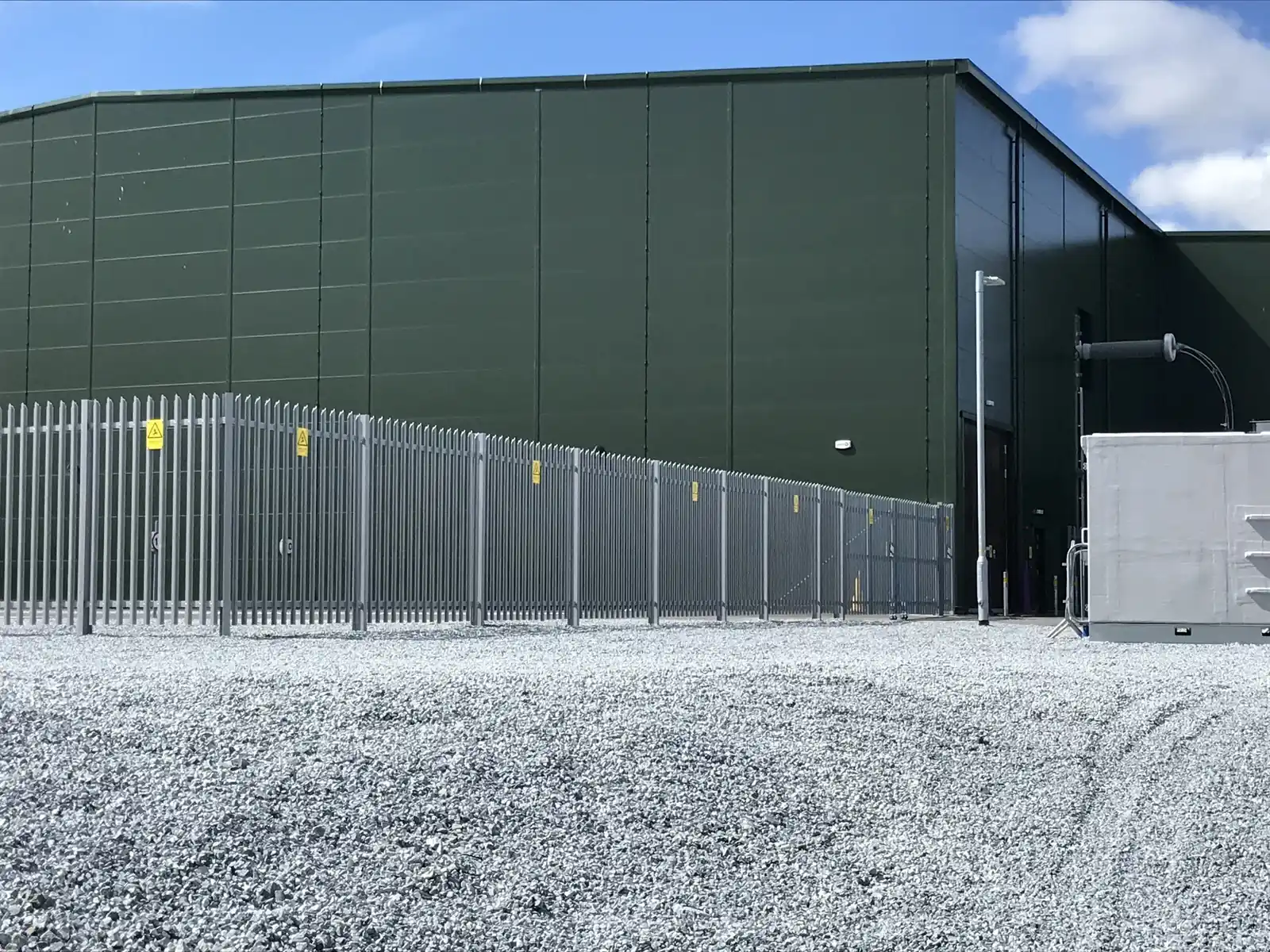
GRP fencing examples
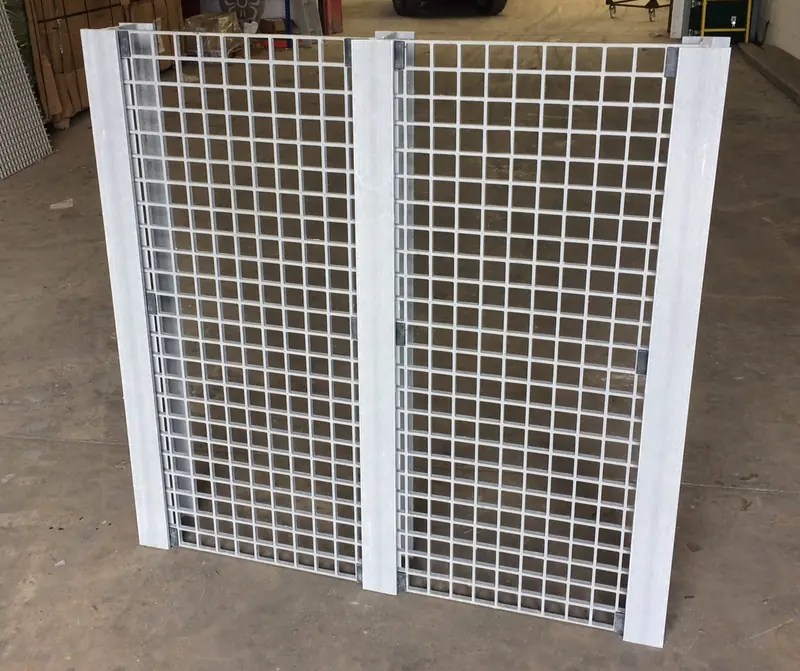
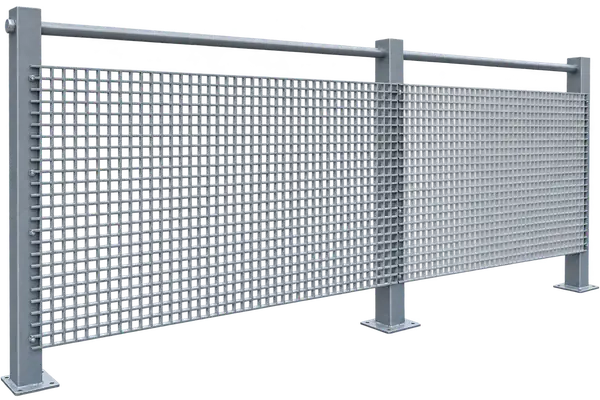
See palisade fencing in grey and black finishes, including a rail-side setting, alongside examples of GRP mesh panels. Ask Captrad about the right fencing arrangement for your site.
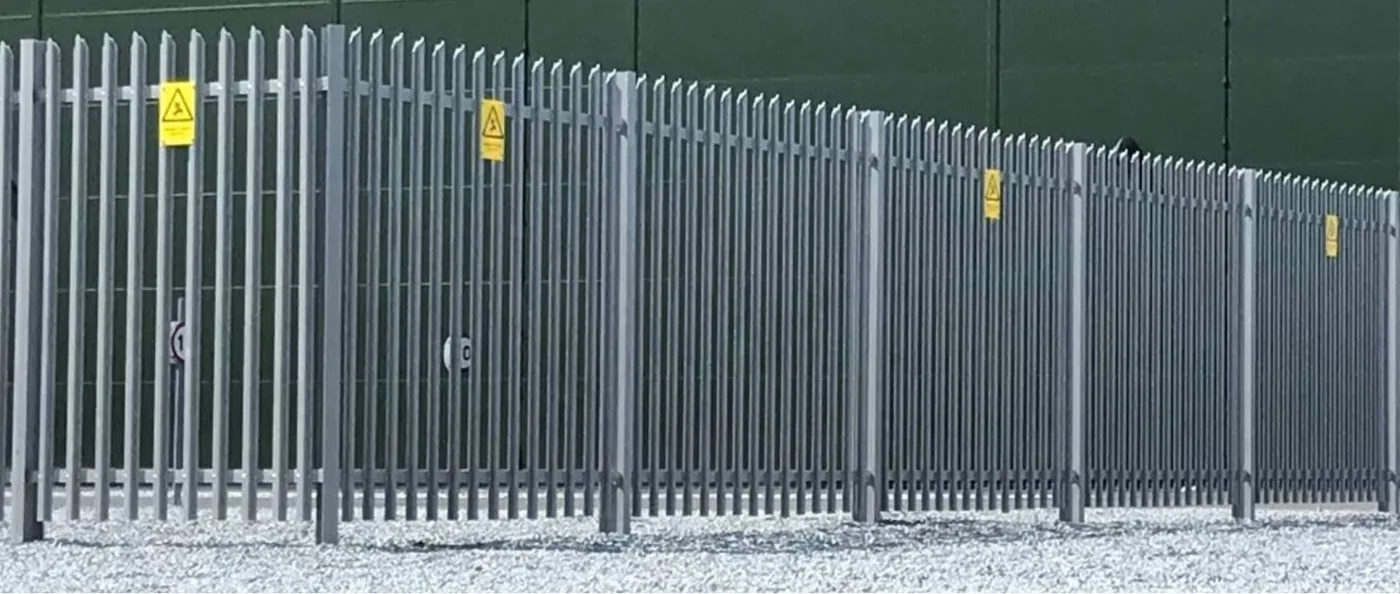
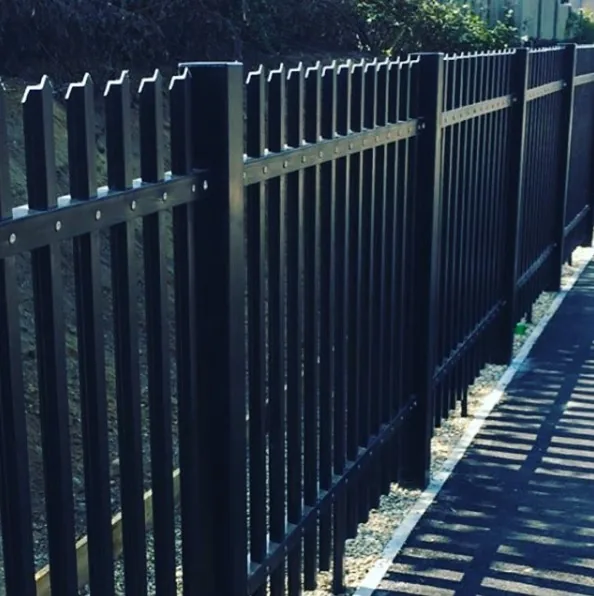
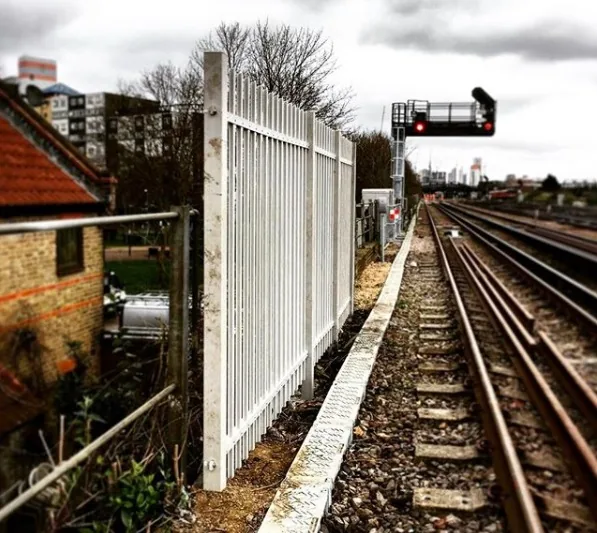
The palisade system
Explore the panel layout, component options and installation guidance for Captrad’s GRP palisade fencing system.
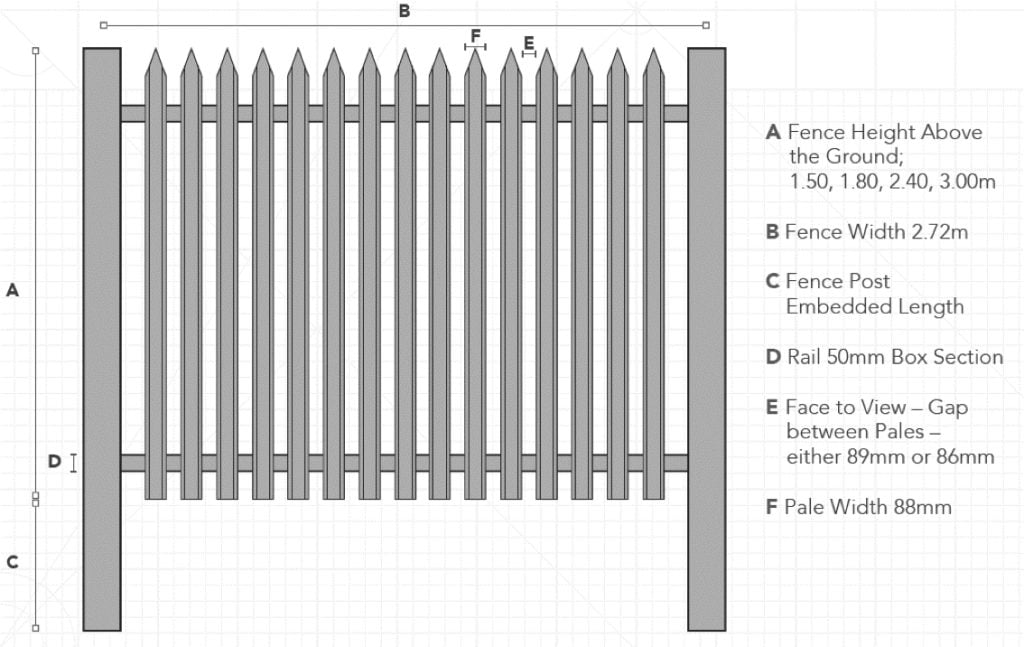
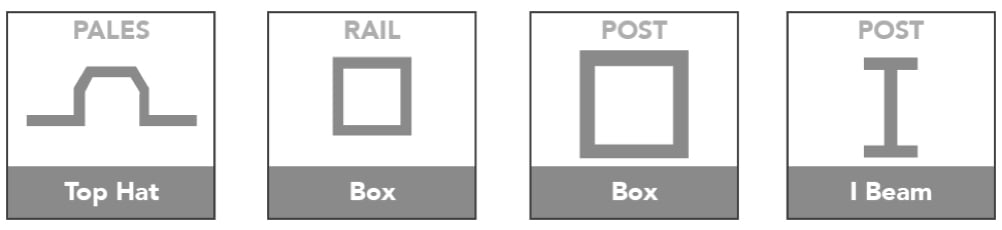
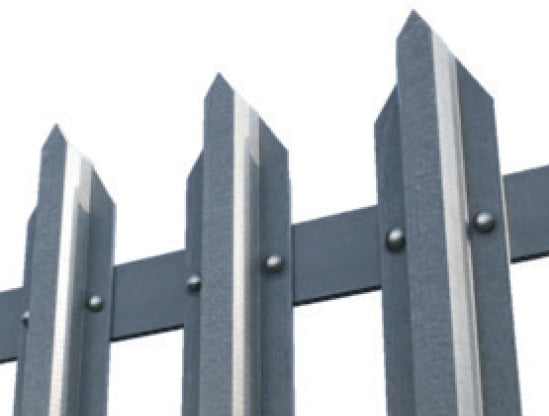
Captrad’s GRP palisade fencing system uses top-hat pales with GRP rails and I-beam or box-section posts. The established standard panel is 2.72 m wide; the 1.8 m-high panel uses 15 top-hat pales, with a part panel available where required.
For the established 1.8 m panel example, 60 × 60 × 8 mm GRP angle is used as the rail. Rails are pre-drilled for 13 of the 15 pales to simplify on-site assembly without a jig, with cleats and pale-to-rail fixings included.
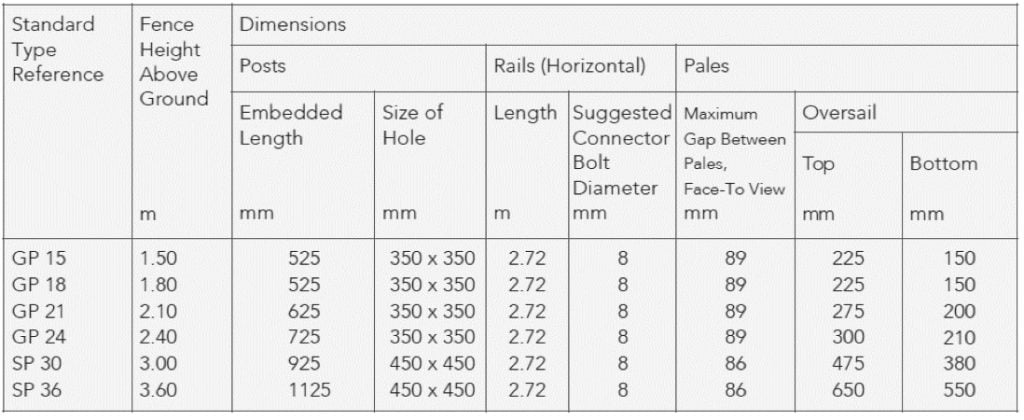
The technical layout shows fencing heights of 1.50 m, 1.80 m, 2.40 m and 3.00 m above ground, with a standard 2.72 m panel width. Recommended embedded posts are 152 × 76 × 6.35 mm I-beams at 2325 mm long, or 101 × 101 × 6.35 mm box section, with two 10 mm GRP-rebar crossbars for concrete set-in.
Panel configuration
Use these diagrams to compare standard fence heights, panel width and profile options before discussing the final specification with Captrad.
| Panel height | Panel weight |
|---|---|
| 1.8 m | 41 kg |
| 2.4 m | 50 kg |
| 3.0 m | 58 kg |
Panel weights are provided as a guide. Confirm the final configuration, post type, length and site requirements with Captrad before ordering.
Installation guidance
The standard system is stocked unassembled, with pre-drilled parts and a clear fitting arrangement to support a straightforward installation.
Why choose Captrad
Built around project requirements, working environments and long-term performance.
Top-hat pales and GRP rails provide a practical, corrosion-resistant site boundary.
Pales, rails and posts are pre-drilled to simplify the on-site panel assembly process.
A non-metallic fencing option for utilities, infrastructure and exposed installations.
Established panel heights, pale styles and I-beam or box-section post arrangements.
Where it works
Captrad works with customers who need reliable, practical composite solutions for challenging projects. We’ll help assess suitability for your environment and performance requirements.
Discuss your applicationSubstations, transformer compounds and equipment boundaries.
Corrosion-resistant site perimeters for operational facilities.
Request brochure accessSecure fencing for controlled-access infrastructure sites.
Palisade boundaries around plant, storage and process areas.
GRP palisade fencing system
GRP fencing is used to define site boundaries and protect operational areas where corrosion resistance, practical handling and the fence layout matter. Captrad’s palisade system combines top-hat pales, GRP rails and I-beam or box-section posts for utility, rail and industrial projects.
The panel dimensions, profile drawings and installation guidance on this page help you prepare a specification. The right arrangement depends on the finished height, support and ground conditions, access requirements and performance needed for the site.
Choosing your fence
A useful fencing specification starts with the site boundary and how it needs to work, not just a panel size.
Palisade fencing uses individual vertical pales fixed to horizontal rails. The technical dimensions, panel weights and installation information on this page relate to Captrad’s palisade system. The photographs also show mesh-panel examples, which use a different panel format.
Tell us the access, visibility and perimeter requirements for your site so we can discuss an appropriate arrangement. Confirm dimensions and performance for the chosen system rather than applying palisade data to a mesh panel.
GRP means glass-reinforced plastic: glass fibres combined with resin to create a composite profile. Its corrosion resistance makes it worth considering for exposed, wet and operational environments. The complete assembly still needs to be specified, including fixings, supports and interfaces with other structures.
The palisade system uses stainless-steel fixings. Where electrical isolation, security performance or site-owner approvals are required, have the complete arrangement checked against the project specification. A GRP profile alone does not establish the performance of the finished fence.
For a GRP fencing quotation, send the approximate boundary length and finished height, together with a drawing or sketch of the route. Include:
Captrad can use this information to discuss panel quantities, post arrangements and component options. Confirm availability, final dimensions and the installation detail before ordering.
Discuss your GRP fencing projectProject questions
Answers to the questions our technical sales team is most often asked.
GRP fencing uses glass-reinforced plastic profiles or panels to form a site boundary. GRP is a composite of glass fibres and resin, also referred to as fibreglass. Captrad’s palisade system uses GRP pales, rails and posts with A2-grade stainless-steel fixings.
The established system uses GRP top-hat pales, GRP rails and I-beam or box-section posts, with A2-grade stainless-steel fixings.
The established drawing shows above-ground fence heights of 1.50 m, 1.80 m, 2.40 m and 3.00 m. Discuss the finished height, post arrangement and ground conditions with Captrad for the individual project.
The established standard fence-panel width is 2.72 m. The 1.8 m-high panel uses 15 top-hat pales, with a part panel available where required.
Yes. The established product information states that fencing is stocked unassembled, with pales double-bolted at the top and bottom and pre-drilled rails and posts to simplify site assembly.
The original product information states that profiles comply with BS EN 13706 (E17 or E23) and are independently tested to BS 1722-12:2016. Confirm final performance and specification requirements with Captrad.
GRP palisade fencing can be considered for substations and electrical compounds, water and utility facilities, rail infrastructure and industrial perimeters. Suitability depends on the required security arrangement, fence height, supports, exposure and project specification.
No. The GRP palisade system on this page is intended for infrastructure and industrial site boundaries. Composite garden fencing is a different product range, generally selected for landscaping and appearance rather than the same palisade configuration.
Not necessarily. The pales, rails and posts in the palisade system are GRP, but the established assembly uses A2-grade stainless-steel fixings. If electrical isolation or a metal-free assembly is required, ask Captrad to review the full specification; do not assume the complete fence is non-conductive.
Send the approximate fence length and height, site or boundary drawings, ground and fixing details, any gates or corners, pale-top preference, required colour and delivery location. Captrad can use these to discuss the appropriate panel and post arrangement.
Start your project
Tell us what you need and the Captrad team will respond with practical product support.
Contact Captrad for stock, technical advice or a bespoke manufacturing quotation.
Call 01695 280510